1. Qutub Minar Tower
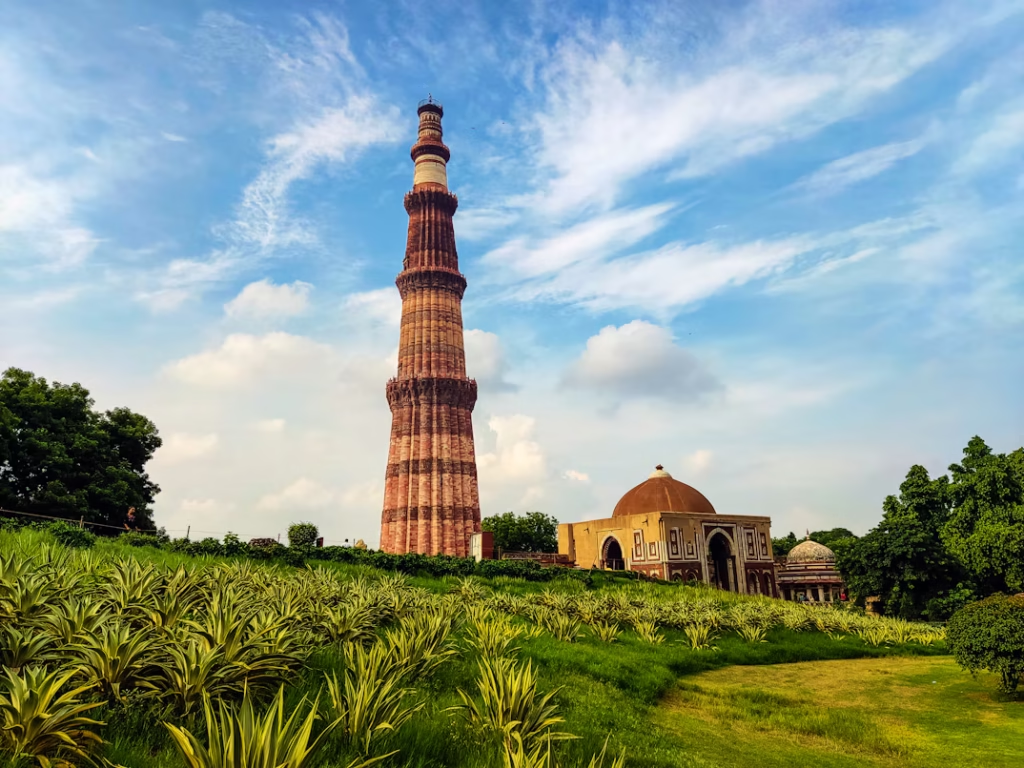
You can spot Qutub Minar rising above the complex long before you reach its base. Standing approximately 72.5 metres tall, this magnificent tower is the main attraction and one of Delhi’s most recognisable historical landmarks. Construction began in 1199 under Qutb-ud-din Aibak and was continued by Iltutmish, with later rulers contributing to its repairs and preservation. What makes the tower truly impressive is its attention to detail. Its red and buff sandstone surface features intricate inscriptions, fluted patterns and projecting balconies that give the structure its distinctive appearance. Each storey has its own character, making the tower fascinating to examine up close.
What to look for: Walk around the monument to appreciate its changing patterns and proportions. You’ll find that the smaller architectural details are just as interesting as its extraordinary height.
2. Quwwat-ul-Islam Mosque
Step away from the towering minaret, and you’ll discover another important chapter of Delhi’s history at the Quwwat-ul-Islam Mosque. Built during the early Delhi Sultanate, the mosque is among the most historically significant structures within the Qutub complex. Its open courtyard, carved stone pillars and surviving architectural remains offer a glimpse into the artistic traditions of medieval Delhi. The structure also reflects the reuse of architectural elements from earlier Hindu and Jain temples, making it an important site for understanding the complex layers of the region’s past. Unlike Qutub Minar, which immediately catches your eye with its height, the mosque rewards visitors who slow down and observe. Look closely at the pillars, stonework and inscriptions to appreciate the craftsmanship and historical details preserved here.
What makes it special: The mosque offers a deeper understanding of the complex’s architectural history beyond its most famous monument.
3. Alai Darwaza
If you appreciate architecture, Alai Darwaza is one structure you shouldn’t rush past. Built in 1311 by Alauddin Khalji, this elegant gateway is known for its red sandstone, marble decoration and beautifully proportioned arches. The gateway stands out for its refined design and decorative details. Geometric patterns, intricate carvings and contrasting materials give it an appearance that feels remarkably sophisticated. It also represents an important stage in the development of Indo-Islamic architecture in India. Take a closer look at the arches and the delicate stonework rather than admiring the gateway only from a distance. The details reveal the level of skill involved in creating a structure that is both decorative and carefully balanced.
Photography tip: Frame the gateway symmetrically to capture its arches and architectural patterns. It’s an excellent spot for detailed architectural photographs.
4. The Ancient Iron Pillar
Not every remarkable monument needs to be enormous. The Iron Pillar proves that a relatively simple structure can hold centuries of history and scientific curiosity. Located within the Qutub complex, this ancient pillar is famous for its remarkable resistance to corrosion. It is generally dated to the Gupta period and bears a Sanskrit inscription written in Brahmi script, providing valuable clues about its historical background. What makes the pillar especially fascinating is the metallurgical knowledge behind it. Its condition over many centuries has attracted researchers interested in ancient Indian metalworking techniques. Standing beside it, you’re looking at an object that connects archaeology, science and history in a surprisingly tangible way. Take a moment to observe the pillar and its inscription instead of treating it as just another stop on your route. Its story is a reminder that India’s architectural and technological achievements extend far beyond monumental buildings.
Why visit: It’s a must-see for anyone curious about ancient engineering, archaeological discoveries and the lesser-known stories of Delhi’s past.
5. Tomb of Iltutmish
Quieter and less imposing than Qutub Minar, the Tomb of Iltutmish offers a more intimate look at the craftsmanship of the early Delhi Sultanate. Iltutmish played a major role in consolidating the Sultanate, and his tomb remains an important part of the Qutub complex. The structure is particularly notable for its richly carved interior, decorative inscriptions and intricate stone patterns. Its walls feature detailed workmanship that rewards a closer look, especially if you enjoy exploring the artistic elements of historical buildings. As you move through the monument, notice how the decoration draws attention to the walls rather than relying on a towering exterior. The tomb provides a useful contrast to Qutub Minar and helps visitors understand the range of architectural styles found within the complex.
Don’t miss: Spend a few minutes examining the carvings and inscriptions. They are among the most interesting features of this historic resting place.
6. The Unfinished Alai Minar
Imagine planning a tower that would surpass the famous Qutub Minar in scale, only for construction to stop before the vision could be completed. That is the story behind Alai Minar. Commissioned by Alauddin Khalji, the unfinished structure was intended to be larger than Qutub Minar. However, the project was abandoned after his death, leaving behind a massive stone base that still stands within the complex. Unlike the polished surfaces and carefully finished storeys of Qutub Minar, Alai Minar looks raw and incomplete. Its broad base makes it easy to imagine the scale of the original ambition, while its unfinished state offers a striking contrast to the completed tower nearby. This monument is a reminder that historical sites preserve not only great achievements but also plans that never came to fruition. It adds a different kind of interest to your visit: a story of ambition, interrupted progress and the passage of time.
Look out for: Compare its unfinished base with the completed Qutub Minar nearby to appreciate the difference between the two structures.
7. Photography and Heritage Walks
The best way to experience the Qutub Minar complex is to explore it slowly, camera in hand or simply with an eye for detail. Although the towering minaret naturally draws attention, the surrounding gateways, carved pillars, ancient inscriptions and historic ruins offer plenty of other subjects to discover. Rather than heading straight for the main tower and leaving after a few photographs, follow the permitted pathways and explore the complex at a comfortable pace. Try capturing a wide shot of Qutub Minar against the sky, then focus on the smaller details in the sandstone and marble structures. These contrasting perspectives help tell a more complete story of the site. Morning and late afternoon can provide softer natural light, depending on the weather and season. If photography isn’t your priority, a relaxed heritage walk is still a rewarding way to appreciate the monuments and their historical connections.

Pingback: 7 Best Places To Visit In Connaught Place Delhi