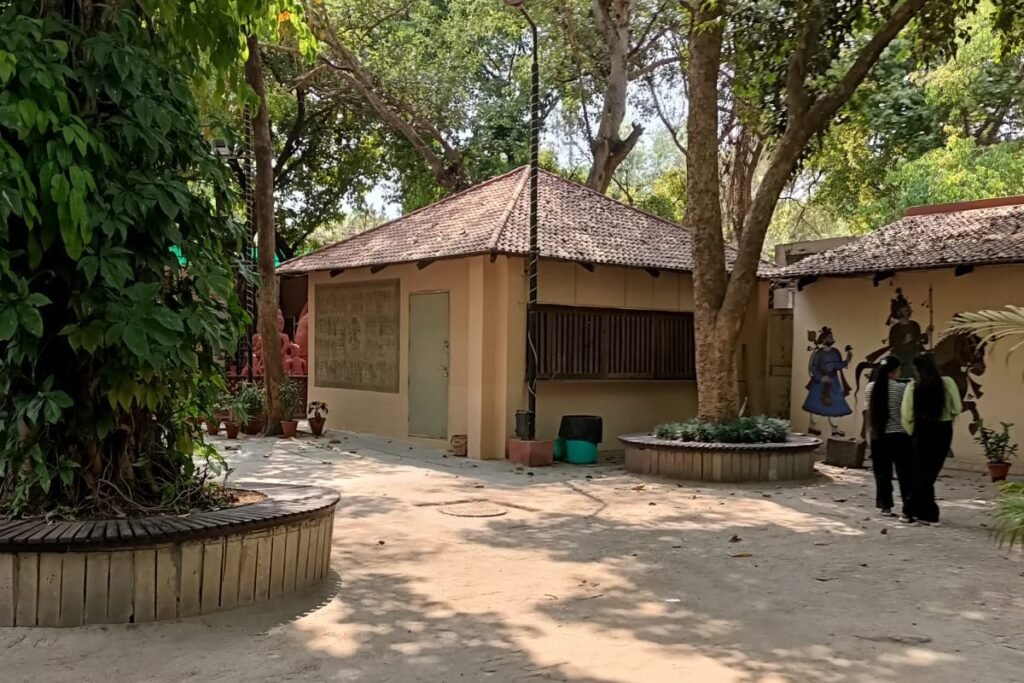
1. The Village Complex
The Village Complex is one of the highlights of the National Crafts Museum Delhi, offering a glimpse into traditional Indian architecture and rural lifestyles. This open-air section features village-style houses, courtyards and structures inspired by different regions of India. As you walk through, notice the building materials, decorative patterns and architectural details that reflect local traditions. Each structure tells a story about how communities lived and used locally available resources to create beautiful, functional homes. It is a wonderful place to explore India’s cultural heritage at a relaxed pace.
2. Traditional Handicrafts
The traditional handicrafts section celebrates the creativity and skills of Indian artisans. Here, you can discover objects made from wood, clay, metal, cane and bamboo, including decorative lamps, utensils, sculptures and handmade artefacts. These objects reflect regional customs, everyday life and traditional craftsmanship passed down through generations. Pay attention to the intricate designs and detailing, as even the simplest objects often require considerable patience and skill. If you enjoy handmade products and Indian art, this section offers plenty of inspiration.
3. Textiles and Handloom Traditions
If you love sarees, fashion, embroidery and Indian fabrics, the textile displays at the National Crafts Museum Delhi are worth exploring. They showcase the diversity of traditional weaving, printing techniques and embroidery styles found across India. Notice the colours, patterns, textures and motifs that make each textile unique. These fabrics are more than beautiful pieces of material; they represent the cultural identity and artistic traditions of different communities. This section is particularly interesting for anyone who appreciates Indian fashion and the craftsmanship behind handmade textiles.
4. Folk and Tribal Art
The folk and tribal art displays offer a colourful introduction to India’s diverse artistic traditions. Paintings, decorative objects and symbolic patterns portray nature, festivals, community life and traditional stories. Different communities use distinctive colours, shapes and symbols to express their experiences and preserve their cultural identities. Take your time to appreciate the details and understand how art connects with everyday life. Even if you are not an art enthusiast, this section at Hastkala Academy Delhi provides an interesting perspective on India’s rich cultural diversity.
5. Live Craft Demonstrations
Depending on the schedule, you may get an opportunity to watch artisans demonstrate traditional craft techniques. Seeing craftspeople work gives you a better understanding of the patience, precision and experience required to create handmade objects. These demonstrations also highlight the importance of preserving traditional skills in a modern world. Since artisan availability and demonstration timings can vary, check the National Crafts Museum Delhi schedule before visiting.
Cafe Lota: Where to Eat Inside the Crafts Museum
After exploring the galleries, take a break at Cafe Lota, located within the National Crafts Museum Delhi complex. It serves a contemporary take on regional Indian dishes in a green, relaxed setting that suits the museum’s theme. Reviewers also mention pleasant open-air dining, especially on a sunny winter afternoon.
Popular picks include the Bhapa Doi Cheesecake, a modern version of Bengali steamed yogurt, along with Palak Patta Chaat and Chicken Ghee Roast. The cafe also has a separate breakfast menu with items like ragi pancakes and mushroom uttapams. It serves both veg and non-veg food but no alcohol, and a meal for two costs around ₹1,200. Menu and prices change, so check before you go.